Is Bukchon Hanok
Village worth it?
Yes — it costs nothing, takes 45–60 minutes, and sits exactly between Gyeongbokgung and Changdeokgung, so skipping it takes actual effort. One thing to respect: this is a lived-in neighborhood, not a set. The famous alleys now run an official 10:00–17:00 visiting window with marshals and fines for loud groups. Come at the edges — before 09:30 or after 17:00 the light is better and the crowds are gone; just keep to the main lanes and viewpoints and keep your voice down.
Fit check
What to expect
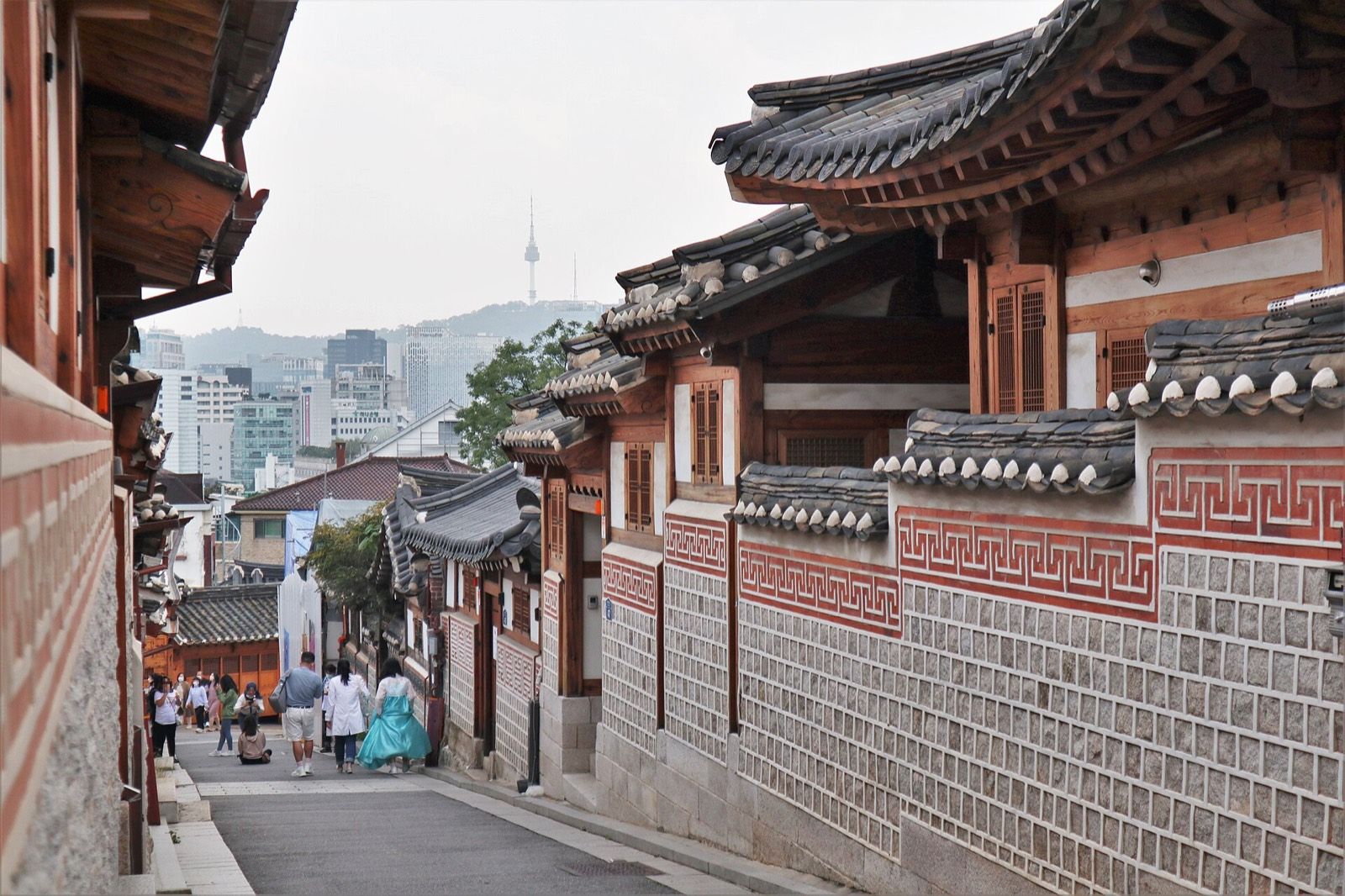
Bukchon is a 600-year-old residential district of roughly 900 hanok — tiled roofs, timber frames, stone walls — draped over the hill between the two big palaces. The route almost everyone walks: Line 3, Anguk Station, Exit 2, uphill past the tourist information point, then the ladder of alleys around Bukchon-ro 11-gil, where the classic shot lines up hanok roofs with N Seoul Tower floating behind them. The district's signposted 'eight views' mark the best photo spots if you want a checklist.
Plan it as the filling in a palace sandwich: Gyeongbokgung at 09:00, Bukchon after the 10:00 guard ceremony, then lunch in Insadong — a 10-minute downhill walk — or on the cafe streets of Samcheong-dong along the village's west edge. Hanbok rentals cluster around Anguk Station (₩15,000–20,000 for a few hours), and this is the single best neighborhood in Seoul to wear one.
People live here — act like it
The postcard alleys got so overrun that residents pushed the district into enforcement: the core lanes around Bukchon-ro 11-gil now carry an official visiting window of 10:00–17:00, red-vested marshals with 'please be quiet' paddles, and fines on the books (up to ₩100,000) for noisy groups. It's the first place in Korea to regulate tourists this way — and honestly, fair enough.
In practice: outside the window, stick to the main streets and viewpoints rather than the tight residential lanes, speak at library volume everywhere, don't open anyone's gate, and don't fly a drone. Do that and dawn or dusk visits are no problem — and they're when the neighborhood is at its best.
The practical bit
Tours that include Bukchon
You don't need a tour for Bukchon itself — it's a free stroll. Book one only if you want the whole palace–Bukchon–Insadong day narrated and driven for you.
FAQ
Is Bukchon Hanok Village free?
Yes — it's a public residential neighborhood: no ticket, no gate. Your only likely spends are hanbok rental (₩15,000–20,000), coffee in Samcheong-dong, or a hanok tea house. That makes it the best-value hour in Seoul alongside the ₩3,000 palace next door.
What time should I visit Bukchon?
Before 09:30 or after 17:00 — soft light, empty lanes, no tour groups. Note the core alleys run an official 10:00–17:00 visiting window with quiet-hour enforcement, so at the edges of the day keep to the main streets and viewpoints and stay silent-museum quiet.
Do people actually live in Bukchon?
Yes — around 900 hanok, most of them private homes, which is the entire point and the entire problem. Overtourism got bad enough that the district introduced marshals, the 10:00–17:00 window and fines up to ₩100,000 for noise. Treat it like someone's street, because it is.
How long does Bukchon Hanok Village take?
45–60 minutes covers the main alleys and the N Seoul Tower viewpoint at a relaxed pace; add 30–60 minutes for hanbok photos or a tea house. It slots perfectly between a 2-hour Gyeongbokgung visit and lunch in Insadong — see our 1-day itinerary.
How do I get to Bukchon Hanok Village?
Line 3 to Anguk Station, Exit 2, then five minutes uphill following the signs. From Gyeongbokgung's east side it's a 10–15 minute walk; from Insadong about 10 minutes north. No bus or taxi needed — this whole district is walking territory.
Is Bukchon worth it if I'm short on time?
Yes — it's the rare sight with zero overhead: no ticket, no queue, no booking. Even 30 minutes gets you the signature viewpoint and a handful of alleys, and it's directly en route between the two palaces you're probably seeing anyway.